Housing First in Europe: Study identifies successes, bottlenecks and solutions
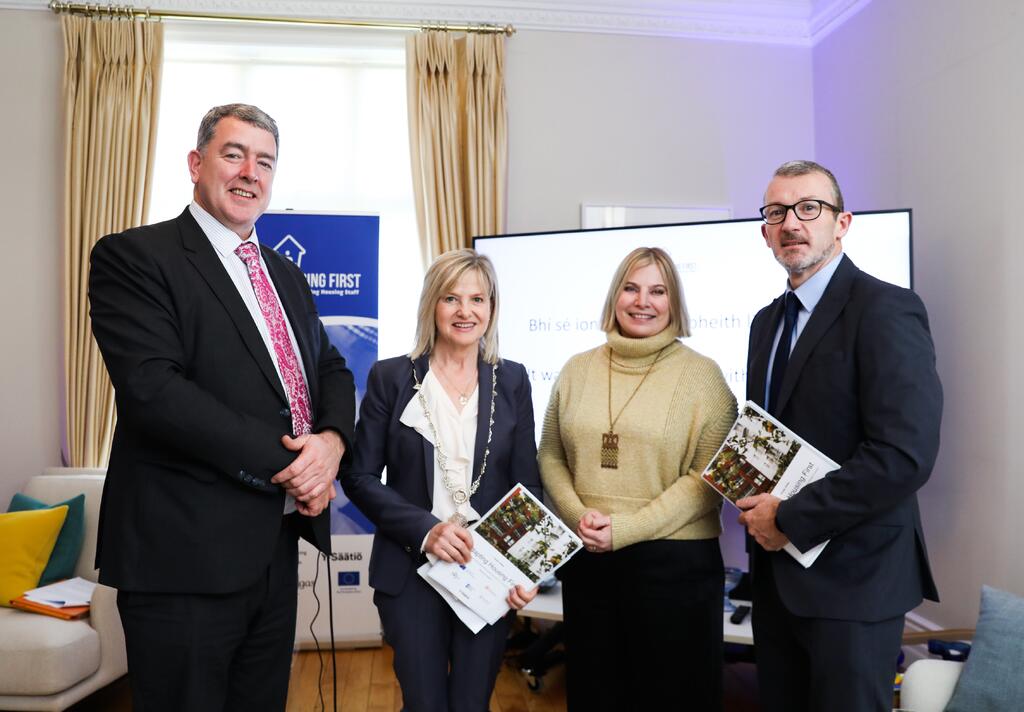
The Adapting Housing First project’s final seminar was held in Dublin on 20 November at the Residence of the Embassy of Finland. During the event, the project’s key findings were presented and the project’s research report, produced by Y-Säätiö (Finland), was officially launched.
The study confirms that Housing First works: securing a permanent home first, and then tailoring support around the person, creates stability, safety and improved wellbeing.
Drawing on interviews across partner countries, researcher Dr Riikka Perälä noted that residents described Housing First housing as enabling independent living and as a route “back to membership in society,” while workers often saw obtaining a home as a decisive turning point that helps address other life challenges as well.
At the same time, the report underlines that successful implementation is always shaped by local context. Perälä emphasised that the strongest outcomes emerge when the core ethos of Housing First remains clear, but day-to-day practice is built on local strengths, services, housing opportunities and partnerships, so that impact can be scaled up.
The research identifies major bottlenecks to expansion in Europe: the lack of affordable housing, fragmented service systems and short-term, project-based funding. Perälä highlighted that ending homelessness requires housing and sound housing policy—and calls it a “paradigm shift” where securing housing acquiring, building, renting, renovating) becomes the core of homelessness work, with more housing professionals involved alongside social and health services.
The report also points to development priorities such as homelessness prevention and suitable options for people with high support needs (including single-site/community-based housing), and workforce training (e.g., trauma-informed practice, harm reduction, substance-use expertise and staff wellbeing).
Download Copy of Research Findings Report
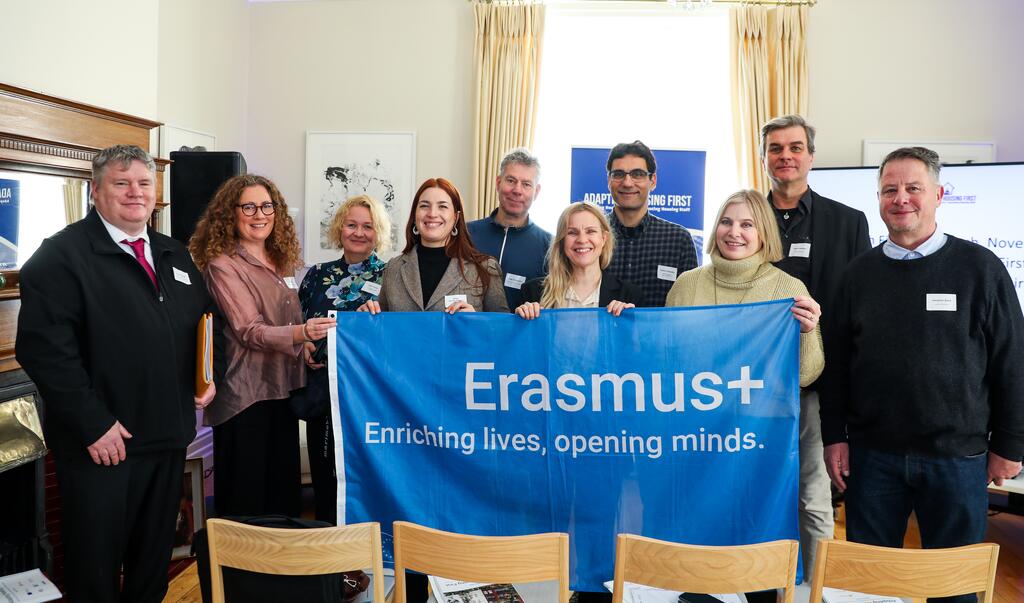 Partner Group, with the Finnish Ambassador to Ireland Lenna Gardemeister, at the Dublin Launch. November 2025
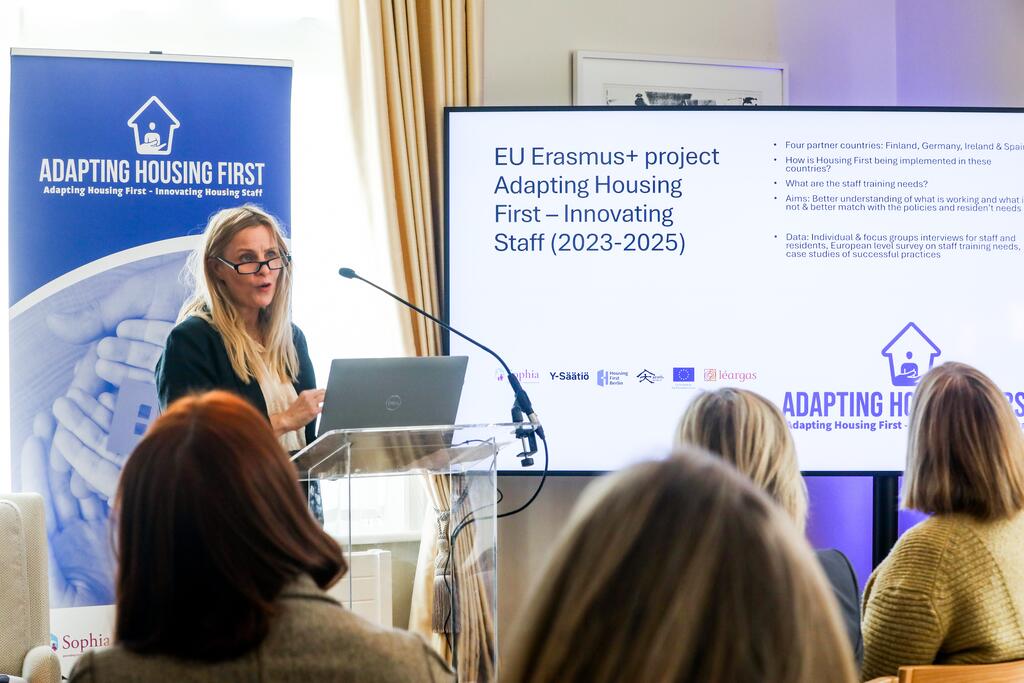 Dr Riikka Perälä – Presenting the Adapting Housing First Research Findings, at the Dublin Launch, November 2025
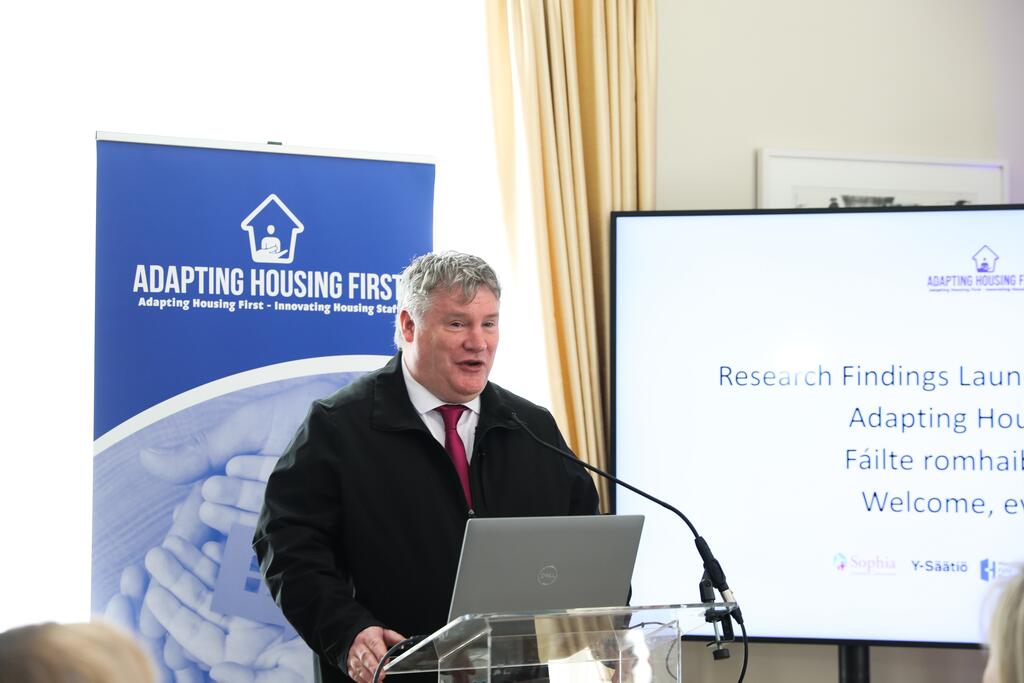 Tony O’Riordan, CEO Sophia Housing. Launch of the Adapting Housing First Research Findings, in Dublin, November 2025.
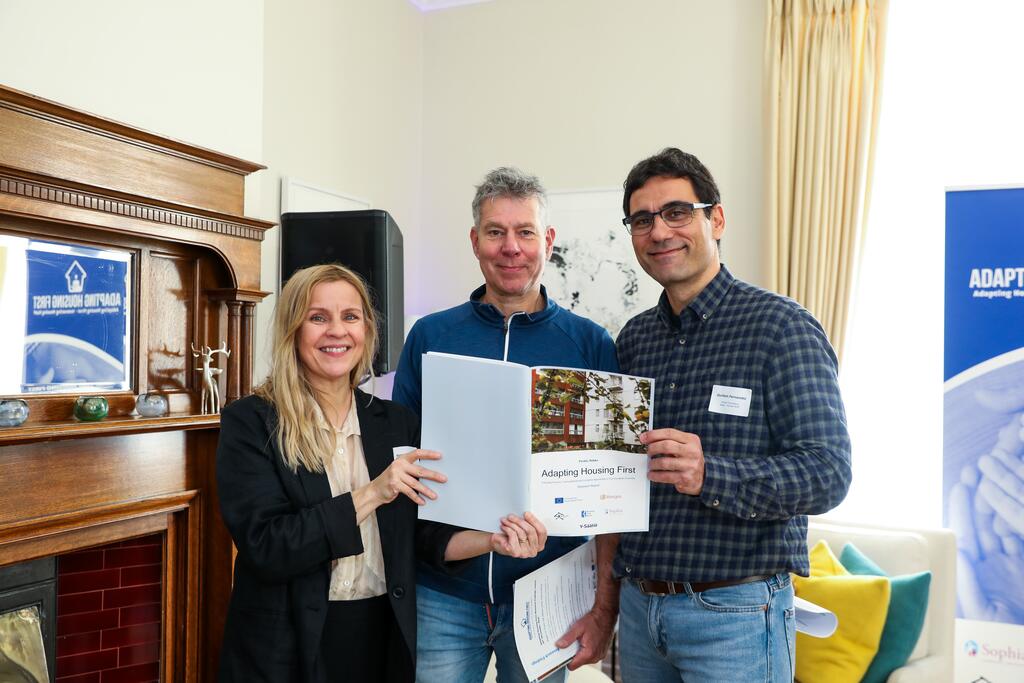 Riikka Perälä (Y-Foundation), Guillem Fernandez Evangelis (Arrels) and Ingo Bullermann (Housing First Berlin) at the Dublin Launch of the publication of the Adapting Housing First Research Findings.